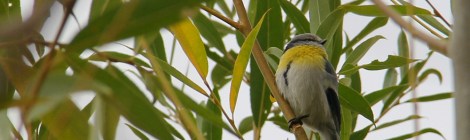
Yellow-breasted Tit (Cyanistes cyanus flavipectus)
The Yellow-breasted Tit (Cyanistes cyanus flavipectus) is a subspecies of the Azure Tit which is especially common in Central Asia. Outside this area, the small birds are only rare vagrants. […]

The Yellow-breasted Tit (Cyanistes cyanus flavipectus) is a subspecies of the Azure Tit which is especially common in Central Asia. Outside this area, the small birds are only rare vagrants. […]

The White-throated Kingfisher (Halycon smyrnensis) is a very wide-ranging species occurring from eastern Europe (e.g., Bulgaria) through Turkey, western, southern, and south-eastern Asia until the Philippines in the far east. […]
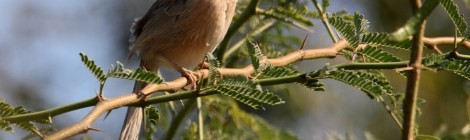
The Common Babbler (Turdoides caudata) occurs from Iraq and Iran in the east until India in the west. Throughout its range it favours dry open scrub areas where it feeds […]

The Grey Junglefowl (Gallus sonneratii) is a bird endemic to India where it inhabits forest undergrowth, secondary growth, and bamboo thickets. So far no concerns for this species have been […]

The Green Bee-eater (Merops orientalis) is a widespread resident across sub-Saharan Africa from Senegal in the west to Ethiopia in the east. It also occurs along the Nile Valley and […]

The Black Kite (Milvus migrans) is a medium-sized bird of prey occurring through much of Europe, Africa, Asia, and Australia. With especially large populations in South Asia, some believe it […]

The Indian Wild Ass (Equus hemionus khur), also called the Khur, originally inhabited large parts of southern Asia including western India, Pakistan, Afghanistan, and eastern Iran. However, populations diminished dramatically […]

The Rhesus Macaque (Macaca mulatta) has the widest geographical distribution of any primate except for us humans. It occurs all the way from Afghanistan and Pakistan through northern India up […]
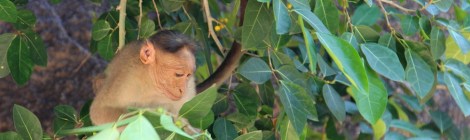
The Bonnet Macaque (Macaca radiata) is a monkey species endemic to southern India where it can be found in a wide array of habitats ranging from forests to open grasslands. […]
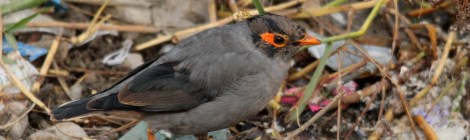
The Bank Myna (Acridotheres ginginianus) is a close relative to the Common Myna of last week’s post. The ranges of both species overlap, but there is no danger of confusing […]
 Matt Travels