
Common Redshank (Tringa totanus)
The Common Redshank (Tringa totanus) is a medium-sized wader occurring in temperate Europe and Asia. Throughout most of its range, the birds favor coastal areas and other wetlands. They can […]

The Common Redshank (Tringa totanus) is a medium-sized wader occurring in temperate Europe and Asia. Throughout most of its range, the birds favor coastal areas and other wetlands. They can […]

The Eurasian Nuthatch (Sitta europaea) is a small bird occurring within a vast region including most of Europe and northern Asia. The birds are famous for their extraordinary climbing abilites […]

The Black-winged Stilt (Himantopus himantopus) is a very widespread shore bird occurring in Europe, Asia, and Africa. The taxonomy of the species is still debated and some authors differentiate a […]
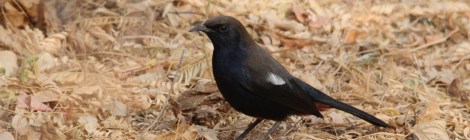
The Indian Robin (Saxicoloides fulicatus) is a small bird occurring almost throughout the Indian subcontinent (India, Bangladesh, Bhutan, Nepal, Pakistan, and Sri Lanka). The birds can be found quite commonly […]

The Oriental Darter (Anhinga melanogaster) is a moderately large water bird occurring in South and Southeast Asia. The birds share many characteristics with cormorants: they prey mostly on fish while […]

The Southern Grey Shrike (Lanius meridionalis) is a medium-sized bird occurring in southern Europe, northern Arica, and parts of Asia (up to China and northern India). Throughout its range, the […]

The Painted Stork (Mycteria leucocephala) is a large wading bird occurring in the Indian subcontinent and Southeast Asia. Records further afield have become rare, but include China. Generally, the birds […]

The Indian Eagle Owl (Bubo bengalensis) is a very large owl species occurring in India, Pakistan, Nepal, and Bangladesh. Apart from their size, the birds can be easily identified by […]
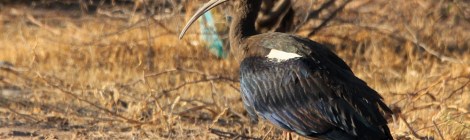
The Red-naped Ibis (Pseudibis papillosa) is a large bird occurring in India, Nepal, Bangladesh, and Pakistan. It can be found in grasslands, on fields, at lakes or marshes, and even […]

The debate whether the African Hoopoe is a separate species (Upupa africana) or merely a subspecies of its European relative (Upupa epops) is still ongoing. Actually, this scientific discussion encompasses […]

